

In this article
- 01What is a guru-śiṣya paramparā?
- 02What can a text not carry?
- 03Why the contradictions are the real problem
- 04The correction you cannot get from a book
- 05Can you learn Vedic astrology from books alone?
- 06Is this just an appeal to authority?
- 07How to check a lineage claim
- 08What this looks like in practice
- 09What it cannot give you
- 10Where this leaves you
Ask your teacher who taught him. Then ask who taught that person.
It is a polite question and it takes four seconds. Most people teaching this subject cannot answer past the first step, and a fair number cannot answer the first step either.
That is not a scandal. It is simply the state of the field, and it explains something you may have been blaming on yourself.
The subject has been published for a century. Translations, commentaries, courses, thousands of hours of video. On the face of it there is more material available now than any student in history has had, and the results are worse.
If you have spent five or ten years reading and still cannot read a stranger’s chart, one obvious explanation is that the material you were learning from had already been separated from the thing that makes it work.
What is a guru-śiṣya paramparā?
An unbroken line of teaching passed from one person to the next, where each teacher was himself taught directly and can name who taught him.
It is not a certificate and it is not a bloodline. It is a chain of instruction, and its only real claim is a practical one: certain things survive that way and do not survive any other way.
The word paramparā means precisely that — one after another, in succession. The interesting question is not whether such chains exist. It is what actually travels down them that could not have travelled in a book.
What can a text not carry?
Five things, and none of them is mystical. Each one is the kind of knowledge that also fails to survive in surgery, in litigation and on a trading desk, which is why those fields still train by apprenticeship in an age of excellent textbooks.
What is missing from the text | Why a book cannot contribute in it |
|---|---|
Which rule wins when two rules conflict | The texts disagree, and none of them adjudicates between the others |
Which factors actually decide the matter | Every text lists twenty; nobody writes down the three that carry the weight |
Correction of your own errors | A book cannot see your working, and your errors are specific to you |
What should not be said aloud | Judgement about a person in a room, learned by watching it done |
When to refuse the work | An ethical instinct, transmitted by example rather than by rule |
Look down that list and notice what it is not. There is no secret verse, no withheld technique, no hidden chapter. Everything on it is judgement — and judgement is the part of any craft that has never transferred in writing.
Why the contradictions are the real problem
This is the one worth understanding properly, because it is where most self-taught study quietly fails.
The classical corpus is enormous and it does not agree with itself. Different texts give different results for the same configuration. The same text will give a rule in one chapter and qualify it out of existence in another. This is not a defect — it is what happens when a body of knowledge is compiled across centuries by people addressing different questions.
So the reader arrives at a chart holding four rules that point in three directions, and no instruction anywhere about which one governs.
The adjudication is the craft. It is also the one thing no text can contain, because a text that could rank all the other texts would simply be another text needing to be ranked.
A teacher who has worked ten thousand charts inside a tradition knows which rule governs in which condition, because he was told, and because he has watched it hold. That knowledge exists. It is simply not written down, and it never was.
The correction you cannot get from a book
The second failure is quieter and it compounds.
When you study alone you develop a personal way of going wrong. You over-weight one factor because it worked memorably once. You skip a step because it feels obvious. You reach conclusions that are defensible on their own terms and consistently miss the same thing.
A book cannot see any of this. Neither can a video, and neither can a course you watch at your own pace. The error is invisible to the material because the material does not know you are there.
This is what a teacher is actually for, and it is unglamorous work: watching a student read a chart and saying, that step was wrong, and here is why, and you did the same thing last month. Most people who have studied for a decade have never once had that sentence said to them.
The mechanics are ordinary. You read a chart in front of someone senior, out loud, including the parts you are unsure about. He stops you at the step where the reasoning turned, not at the conclusion. Then you do it again the following week on a different chart and he stops you at the same step, and the third time you stop yourself.
There is no way to receive that from a recording, and there is no way to give it at scale. It is the reason serious teaching in this subject is small, slow and live, and the reason anyone offering it quickly is offering something else.
Can you learn Vedic astrology from books alone?
You can learn a great deal, and you will stop at a particular point. It is worth naming that point precisely, because most people reach it without recognising what it is.
Books will take you through the vocabulary, the architecture of a chart, the significations, the yogas and the mechanics of calculating a period. That is genuinely most of the subject by volume, and a diligent reader can hold all of it.
Where it stops is at the moment of judgement — a real chart, several rules in play, and a decision to be made about which one governs. That is not a further body of information you have not read yet. It is a different kind of knowledge, and no quantity of the first kind converts into it.
Which is why the tenth year of solitary reading produces so much less than the second did. You are not slowing down. You reached the boundary of what the format can carry, some years ago, and have been re-reading inside it since.
Is this just an appeal to authority?
It can be, and you should treat the claim sceptically. A lineage is a mechanism, not a virtue.
The honest position is that lineages transmit faithfully in both directions. A good one carries judgement that would otherwise be lost. A bad one carries error with exactly the same fidelity, and adds the authority of age to it — which is worse than no lineage at all, because it discourages the questioning that would have caught the mistake.
There is also a version of the claim that exists only to end discussion. If “that is what my paramparā teaches” is offered as a reason not to explain something, you are being managed rather than taught. A living tradition can always give the reasoning; the reasoning is the inheritance.
So the argument is not that lineage makes someone right. It is that certain kinds of knowledge only travel this way — and that you should then check the person as carefully as you would check anyone else.
How to check a lineage claim
Four questions, in ascending order of how much they reveal.
→ Who taught you, and who taught him — names, not adjectives
→ Where and for how long — was this a course, or years of contact
→ What did your teacher correct in you — the answer to this is always specific or always vague
→ Which of your teacher’s positions do you now disagree with, and why
The fourth is the one that separates a student from a follower. Somebody genuinely trained inside a tradition has arrived at at least one point where his own experience diverged, and he can explain it without discomfort. Somebody who has borrowed the authority cannot, because he has no independent working to differ from.
Ask all four of anyone, including of me.
What this looks like in practice
So the same questions, answered here rather than asked.
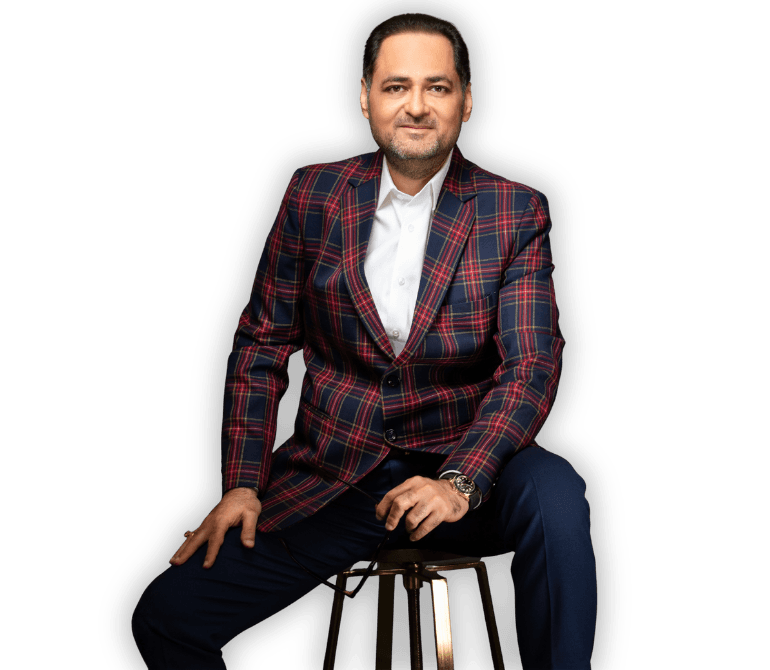
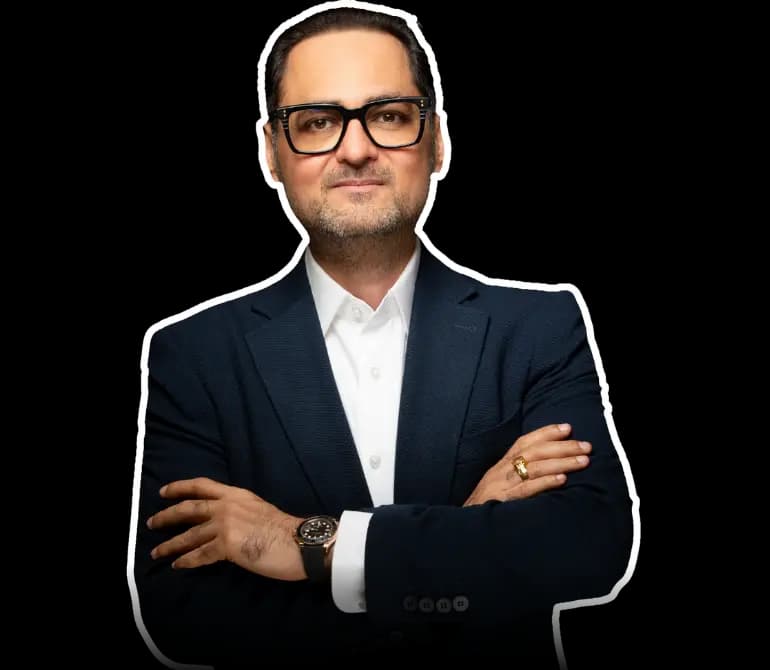
My teacher is Pandit Sanjay Rath. The tradition is the Śrī Acyutānanda paramparā, out of Jagannath Puri, running back roughly five hundred years. My training in it has been over twenty years, and it did not consist of a course.
What it consisted of was charts, read and corrected, for a very long time — alongside a small number of other students of the same teacher, several of whom now teach the subject themselves.
The specific inheritance is Pārāśara and Jaimini held together. Most teachers were trained in one or the other, because the two are taught separately almost everywhere, and the combination is rare even among people teaching professionally. That is not a claim about talent. It is a description of what came down this particular line.
It is also why the Professional programme runs five years and is taught live rather than recorded. Not to make it feel serious. Because correction is the thing being transmitted, and correction requires somebody to be present while you are wrong.
What it cannot give you
Three things, stated so the claim stays honest.
→ It cannot make the study shorter — a lineage removes wasted years, not the work
→ It cannot make a reading immune to being wrong — it makes the reasoning available for inspection
→ It cannot substitute for your own hours in front of charts — nobody has ever inherited competence
If a lineage is offered to you as a shortcut, that is the moment to be careful. It is the opposite of a shortcut. It is the reason the long road actually arrives somewhere.
Where this leaves you
The material you have been studying is not wrong. It is incomplete in a specific and unadvertised way: the judgement that makes it usable was never in the text, and no amount of additional reading will supply it.
A book can teach you what a configuration means. Only a person can tell you which of four correct answers governs the chart in front of you.
So ask the question at the top of this page — of whoever you are learning from now, and of anyone you are considering paying next.
If you want to see how this tradition teaches before committing anything, start at the beginning of the ladder rather than at the end.